01 — products
Our Custom Automation Solutions & Intelligent Manufacturing Systems
Deeply cultivating the fields of automotive thermal management and new energy storage, providing one-stop services for the entire industry including automated production lines, digital factories, and non-standard customized equipment
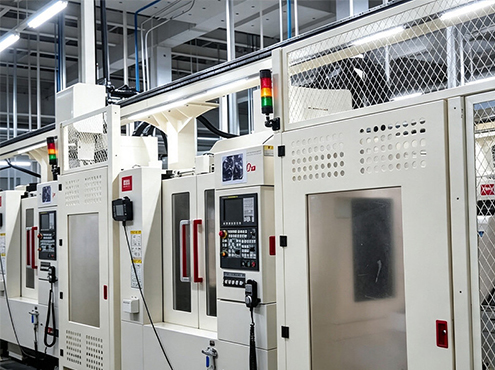
Automotive Thermal Management Production Lines
Automated assembly & EOL testing lines for vehicle HVAC & thermal components
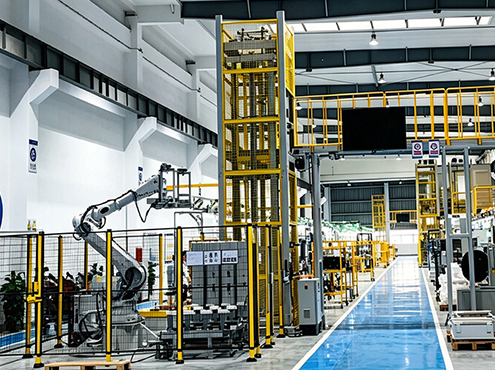
New Energy Energy Storage Production Lines
Turnkey assembly & testing solutions for liquid-cooled energy storage units
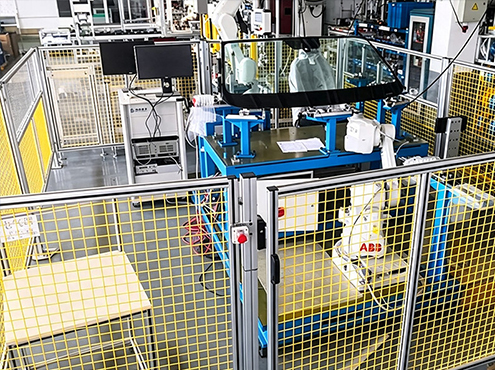
Multi-industry Automated Production Lines
Flexible automation solutions for diversified manufacturing sectors
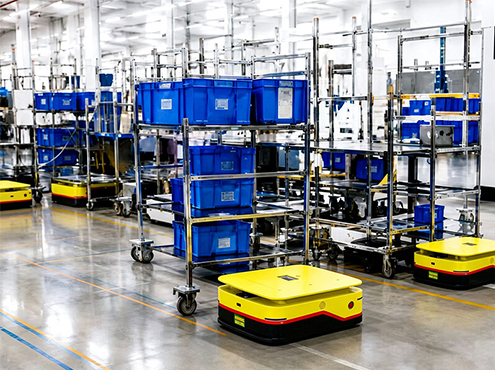
Digital Smart Factory Solutions
MES, data traceability, visual management & intelligent logistics integration
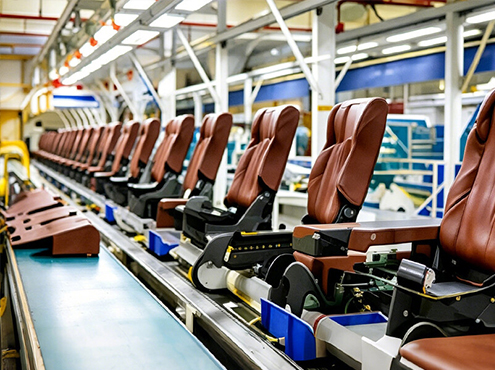
Custom Non-standard Automation Equipment
Custom-built assembly, tightening, leak & functional test equipment
Your product is not on the list?
Send us the part drawing and the annual volume. We will tell you within five working days whether a dedicated line is the right answer — or a leaner cell is.
Thermal management automation · since 2014
Assembly lines for thermal management, engineered from the process up.
Non-standard automation for automotive HVAC modules, EV thermal management systems and energy-storage liquid cooling units. Designed, machined, built and commissioned by one accountable team.
02 — How we work
The line is designed around your CTQ — not around our catalogue.
We have spent twelve years inside automotive thermal management. That means we already know where the leakage paths are on a brazed plate core, why a blower module needs a low-torque fastening sequence, and which station will become the bottleneck at 1.2 million units a year.
03 — Capability
Mechanical, electrical, software and machining — under one roof.
01 — Mechanical
16 design engineers
Station layout, fixture design and 3D simulation of the full line before steel is cut.
02 — Controls
15 electrical engineers
Siemens S7-1500 with PROFINET as standard, safety circuits to category stop, full E-plan documentation.
03 — Software
5 software engineers
Line control, recipe management, MES interfaces, OEE dashboards and test-data archiving.
04 — Machining
20+ machine tools
Milling, grinding, wire EDM and CNC machining in-house — fixture changes in days, not weeks.
04 — Process
From enquiry to start of production
Process review
Part drawings, CTQs, takt target, volume ramp and site constraints. Output: a written process concept and budget range.
Concept & 3D design
Station layout, cycle-time calculation, 3D review with your team. Frozen at design sign-off.
Build & FAT
Machining, assembly, wiring and software in our plants, then factory acceptance with your parts on the line.
Install & commission
Shipping, rigging, installation, commissioning and SAT at your site — with your operators on the console.
Training & support
Operation and maintenance training, documentation handover, spare-parts list and remote diagnostics.
05 — Line performance
A 95-second cycle is an engineering result, not a slogan.
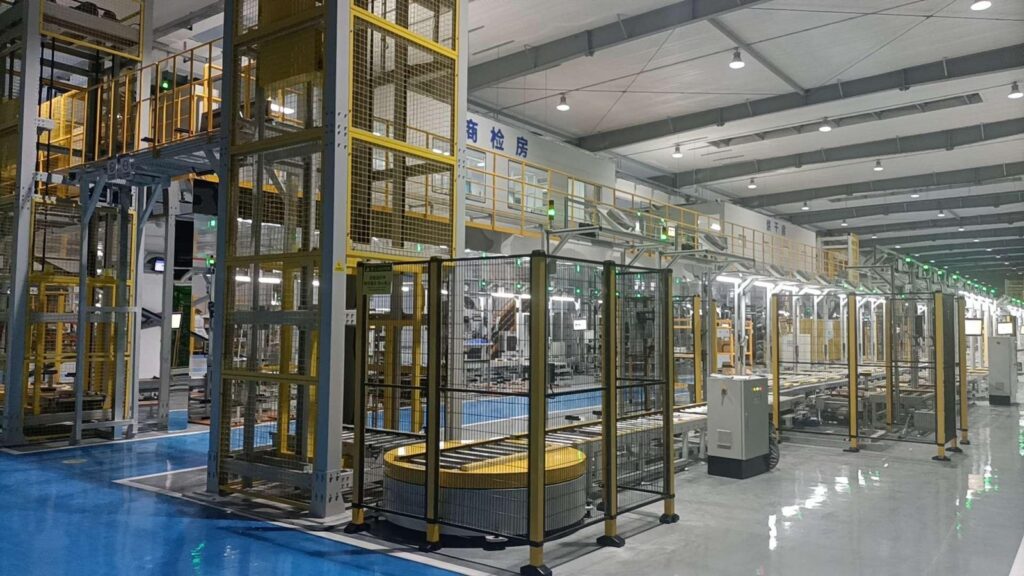
On a recent valve-module programme the line runs at a 95-second cycle with OEE above 90 % — twelve stations from automatic feeding to end-of-line test, every unit traced by RFID tray and serial number.
“The bottleneck moved from assembly to test. We re-balanced two stations during FAT instead of discovering it after SOP — that alone paid for the process study.”
Project note · thermal module programme
06 — Verification
No unit leaves a Guangke line without a test record.
Test stations are not add-ons. They are designed into the station sequence, calibrated before FAT, and locked behind password-protected parameters so a limit cannot be edited on the floor.
01
Air-tightness test
Pressure-decay leak test with pass/fail limits stored per serial.
02
Helium leak detection
Vacuum-chamber helium testing for brazed cores and refrigerant circuits.
03
Halogen trace gas
Sensitive leak location for joints and seals before final assembly.
04
Rain test
Spray and run-off testing for outdoor-rated energy storage cooling units.
05
Electrical safety
Hipot, insulation and earth-bonding checks on every powered unit.
06
End-of-line performance
Cooling capacity, flow, pressure drop and communication checks.
07
Vision inspection
Presence, orientation and grease/oil coverage verified by camera.
08
Aging run
Powered burn-in with live monitoring of temperature and current.
09
Torque traceability
Every fastener recorded with torque and angle against the serial.
10
RFID tray tracking
Product travels with its process history; no manual data entry.
11
Laser marking
Serial and 2D code applied at a fixed process step, not at the end.
12
MES record
Results pushed to your MES; the line can refuse to release a failed unit.
06 — Questions
The questions buyers ask us first.
If yours is not here, the full FAQ covers lead time, IP protection, FAT/SAT and after-sales in more detail.
Request a Quote
Send us your drawings or a rough specification — our engineers will respond with a technical feasibility review and quotation within 24 hours.